You Won’t Believe What We Found Driving Through Sarajevo’s Urban Heart
Driving into Sarajevo feels like stepping into a living story — where East meets West, and history echoes on every street corner. I came for the scenery, but stayed for the soul of the city. Navigating its urban space by car revealed hidden layers: bustling bazaars, quiet hillside views, and corners where time seems frozen. This isn’t just a road trip — it’s a journey through resilience, culture, and unexpected beauty. Let me take you through what we discovered.
Why Sarajevo? The Allure of a City Rebuilt
Sarajevo stands as one of Europe’s most compelling urban destinations, not because it is perfectly preserved or untouched by time, but precisely because it has been reshaped by it. Nestled in a narrow valley surrounded by the Dinaric Alps, the city has long served as a crossroads — geographically, culturally, and spiritually. For centuries, empires have left their mark here: the Ottomans with their mosques and hammams, the Austro-Hungarians with grand neoclassical facades, and the Yugoslav era with its functionalist apartment blocks. Each layer tells a story, and together they form a mosaic that is uniquely Sarajevan.
What makes Sarajevo especially moving is its resilience. The scars of the 1990s siege are still visible in certain buildings, their facades pockmarked by shelling, deliberately left unrepaired as memorials. Yet, the city does not dwell in sorrow. Instead, it moves forward with dignity, rebuilding not just structures but community. New cafes open beside centuries-old mosques, street musicians play near rebuilt tram lines, and children fly kites in parks that were once frontlines. This blend of memory and momentum gives Sarajevo a depth rarely found in modern cities.
For travelers, this means encountering a destination that feels authentic rather than curated. There’s no Disneyland version of history here — just real life unfolding amid echoes of the past. Walking its streets, you sense a collective strength, a quiet pride in survival and renewal. And when you explore by car, you gain a broader perspective on how the city has stitched itself back together, neighborhood by neighborhood, street by street. Sarajevo invites not just sightseeing, but reflection — a rare gift in today’s fast-paced travel culture.
Hitting the Road: Self-Driving as a Gateway to Discovery
One of the most rewarding ways to experience Sarajevo is behind the wheel. While many visitors rely on walking tours or public transit, driving offers unmatched flexibility to explore at your own pace and uncover parts of the city often missed by guidebooks. The experience begins long before you reach the center — as you approach from the highway, the city unfolds gradually, nestled between forested hills, its skyline a mix of minarets, church spires, and apartment towers.
Road conditions in and around Sarajevo are generally good, especially on main arteries like Titova Ulica and Meše Selimovića Boulevard. Secondary roads leading to residential areas or hillside viewpoints may be narrower and occasionally potholed, but they are navigable with a standard rental car. Most international car rental agencies operate at Sarajevo International Airport, offering well-maintained vehicles with GPS systems. However, it’s wise to download offline maps via Google Maps or Maps.me before arrival, as signal can be spotty in hilly zones.
Parking in the city center requires some planning. While paid lots and garages exist near Baščaršija and Ferhadija, spaces fill quickly during peak hours. Many visitors opt to park on the outskirts and use trams or short walks to reach key sites — a strategy that combines convenience with exercise. That said, having a car allows spontaneous detours: perhaps to a quiet neighborhood mosque, a local bakery known only to residents, or a scenic overlook with a view of the Miljacka River winding through town.
For those entering Bosnia and Herzegovina from neighboring Croatia or Montenegro, border crossings are generally smooth, especially if traveling with EU or U.S. passports. Rental cars with international insurance are permitted, though it’s essential to confirm cross-border coverage with your provider. Driving through the countryside en route to Sarajevo also enhances the journey — passing through mountain passes, small villages, and riverside towns adds context to the city’s place within the wider region.
The Old Town Pulse: Baščaršija and Beyond
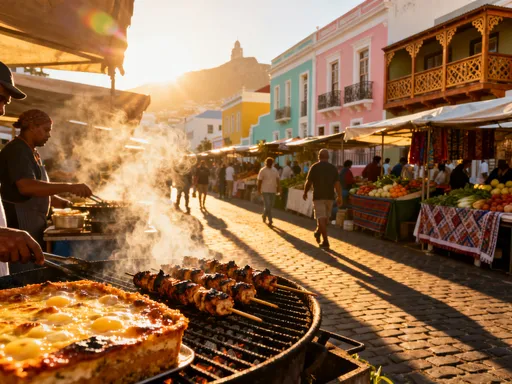
No visit to Sarajevo is complete without stepping into Baščaršija, the historic Ottoman-era bazaar that remains the city’s cultural heartbeat. Cobblestone streets wind beneath arched passageways, lined with copper shops, carpet sellers, and open-air eateries where the scent of grilled meat and simmering coffee fills the air. The sound of water trickling from the Sebilj fountain blends with the chatter of locals and the call to prayer echoing from the Gazi Husrev-beg Mosque, creating a sensory experience unlike any other in the Balkans.
Arriving by car adds a unique dimension to this experience. Rather than diving straight into the pedestrian-only core, you can first observe Baščaršija from a distance — seeing how it fits within the larger urban fabric. Park near the eastern edge of the old town and walk in, allowing the transition from modern traffic to historic tranquility to unfold gradually. This contrast heightens the sense of entering another world, one where time slows and tradition thrives.
Nearby landmarks enrich the visit. The Gazi Husrev-beg Mosque, built in the 16th century, remains an active place of worship and a masterpiece of Islamic architecture. Visitors are welcome to tour the courtyard and outer areas, especially outside prayer times. The adjacent museum offers insight into Ottoman life, while the library preserves centuries-old manuscripts. Just a few steps away, the Morića Han, a restored caravanserai, hosts traditional music nights and serves authentic Bosnian dishes like ćevapi and burek.
What makes Baščaršija special is not just its preservation but its vitality. It’s not a museum piece — it’s a living marketplace where grandmothers haggle over spices, artisans hammer copper by hand, and teenagers sip coffee at outdoor tables. By starting your exploration with a drive, you gain spatial awareness of how this historic core connects to the rest of the city, making your immersion all the more meaningful.
Urban Contrasts: Where Centuries Collide on a Single Street
One of Sarajevo’s most striking features is how seamlessly — and sometimes jarringly — different historical periods coexist. Nowhere is this more evident than along Ferhadija Street, a central thoroughfare that functions as a timeline written in stone and steel. On one side, you’ll find the ornate façade of the Ashkenazi Synagogue, built in 1902 in Viennese Secession style. Across the street stands the Catholic Cathedral of the Sacred Heart, its twin spires rising above the skyline. Just steps away, the minaret of the Gazi Husrev-beg Mosque pierces the sky, a reminder of the city’s Ottoman roots.
This architectural harmony — or deliberate coexistence — reflects Sarajevo’s long tradition of religious and cultural pluralism. Known historically as the “Jerusalem of Europe,” the city has hosted Muslim, Orthodox Christian, Catholic, and Jewish communities for centuries, often living side by side. Even during the difficult years of the 20th century, this spirit of coexistence persisted, and today it is celebrated as a core part of Sarajevo’s identity.
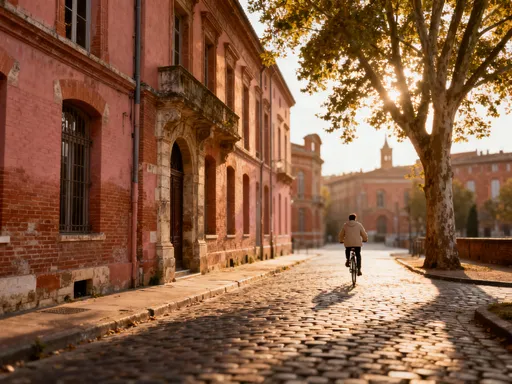
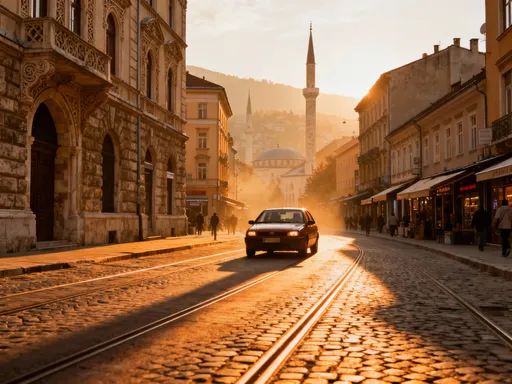
Driving slowly along Ferhadija or Maršala Tita allows you to absorb these contrasts in a way that walking sometimes doesn’t. From the car, you can take in full building façades, notice stylistic details, and observe how modern life integrates with historic structures. You might see a woman in a headscarf walking past a bar with a punk rock poster in the window, or a tram gliding past a neoclassical bank building now housing a digital startup. These moments capture the essence of Sarajevo: a city that honors its past without being trapped by it.
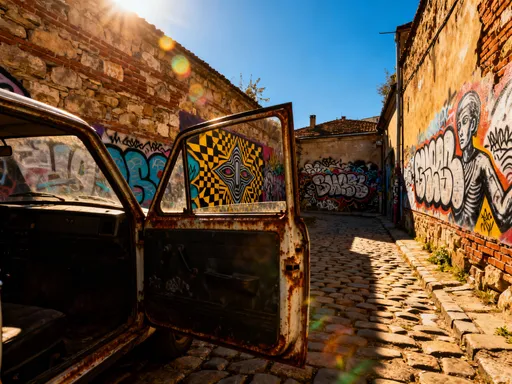
The socialist-era architecture, particularly in neighborhoods like Alifakovac or Koševo, adds another layer. Functional apartment blocks from the Yugoslav period stand alongside newer developments, creating a patchwork that tells the story of a city constantly adapting. While some may find these buildings unremarkable, they are part of Sarajevo’s truth — a reminder that urban life is not always picturesque, but always real.
Hillside Views and Hidden Corners Only Drivers Can Reach
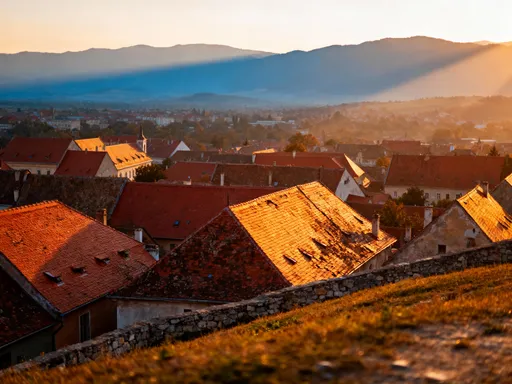
One of the greatest advantages of driving in Sarajevo is access to elevated viewpoints that offer breathtaking panoramas of the city. Among the most beloved is Žuta Tabija, or the Yellow Fortress, perched on a hill just southeast of the old town. Built in the 18th century as a defensive outpost, it now serves as a quiet retreat for locals and visitors alike. Reaching it by car takes less than ten minutes from Baščaršija, and a small parking area near the entrance makes it accessible even for those with limited mobility.
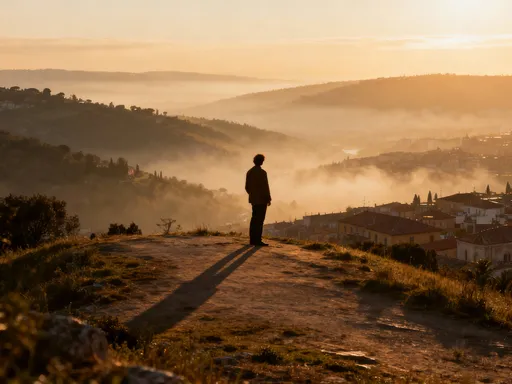
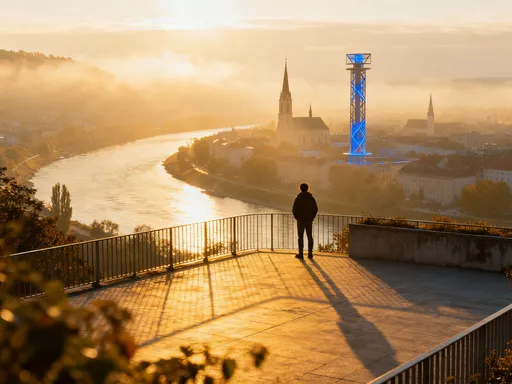
As the sun begins to set, the view from Žuta Tabija becomes magical. The valley glows in golden light, the Miljacka River reflects the sky, and the city’s mix of architectural styles becomes even more apparent from above. Couples sit on stone walls sharing coffee, photographers adjust their tripods, and children run through the grass — a peaceful scene in a place once marked by tension. This is where Sarajevo reveals its softer side, a city that finds beauty in stillness.
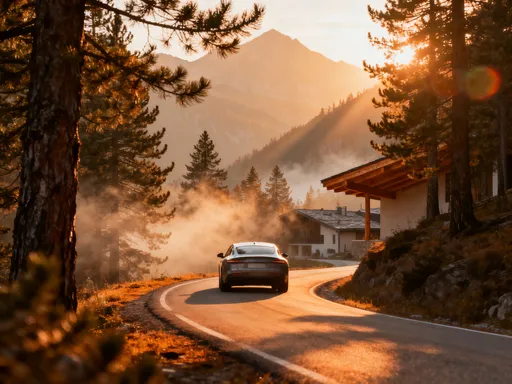
Another rewarding drive leads up to Trebević Mountain, once home to the 1984 Winter Olympics bobsled track. The road climbs steadily, offering changing perspectives of the city below. Along the way, you’ll pass forest trails, abandoned cable car stations, and small family-run restaurants serving hearty mountain food. At the top, even on cloudy days, the air feels fresher, the noise fades, and the sense of escape is complete.
Lesser-known spots like Vidikovac or Hum Hill provide similar rewards. These areas are rarely included in standard tours but are easily reached by car. They offer not just views, but glimpses into residential life — laundry hanging from balconies, elderly men playing chess in courtyards, and the occasional goat grazing on a hillside. These quiet moments, made possible by the freedom of driving, add richness to any visit and create lasting memories.
Living City: How Locals Move, Eat, and Connect
To truly understand Sarajevo, one must observe its rhythms — the way people move, eat, and gather. The city’s tram system, one of the oldest in Europe, remains a vital artery. Yellow trams rattle through traffic, stopping at street-level platforms where commuters board with practiced ease. Watching them from a parked car, you notice how seamlessly they integrate into the urban flow, sharing space with cars, bicycles, and pedestrians.
Food culture is central to daily life, and driving reveals where locals eat when they’re on the go. Along major roads, you’ll find small roadside grills known as ćevabdžinica, where drivers pull over to pick up fresh ćevapi — grilled minced meat served in somun bread with onions and kajmak. These informal spots are often unmarked but packed at lunchtime, a testament to their popularity. Other favorites include buregdžinica, where flaky pastries filled with cheese, meat, or spinach are baked fresh throughout the day.
Café culture is equally important. Bosnian coffee, strong and served in a džezva with a fildžan cup, is more than a drink — it’s a ritual. Drivers often stop at sidewalk cafés to sit for an hour or more, sipping slowly and talking with friends. In neighborhoods like Marijin Dvor or Centar, these cafés buzz with conversation well into the evening. For visitors, joining this tradition offers a window into the warmth and hospitality of Sarajevans.
Interactions with locals are often spontaneous and genuine. At a gas station on the edge of town, an attendant might recommend a hidden bakery. At a red light, a passenger in the next car might smile and wave. These small exchanges, made possible by moving through the city at street level, create connections that transcend language and nationality. Driving, in this sense, becomes more than transportation — it becomes a way of participating in the life of the city.
Smart Tips for a Smooth Urban Drive
To make the most of your self-drive experience in Sarajevo, a few practical tips can go a long way. First, fuel stations are plentiful and reliable, with major brands like OMV, Naftna Industrija Srbije (NIS), and Bosna Gas operating across the city. Most accept credit cards, though it’s wise to carry some local currency (Bosnian convertible mark) for smaller purchases or toll-free roads in rural areas.
Within the city, there are no tolls, but parking regulations should be respected. Look for blue-lined curbs indicating paid parking zones, where fees can be paid via mobile app or nearby machines. Avoid parking near tram tracks or in front of building entrances, as fines are common. In residential areas, unmarked parking is often acceptable, but always observe signage.
One-way streets are frequent in the center, and navigation can be tricky without updated maps. Street signs are typically bilingual — in Latin and Cyrillic script — so learning a few key letters (such as "A" for "A", "B" for "V") can prevent confusion. GPS devices and smartphone apps usually display Latin script, making them user-friendly for international travelers.
Local driving habits are generally calm, though assertive at times. Pedestrians have the right of way in crosswalks, and drivers are expected to yield. Roundabouts are increasingly common and function like those in Western Europe. Speed limits are 50 km/h in urban areas and higher on bypass roads, with speed cameras in use. Defensive driving is recommended, especially during rush hours when trams, buses, and cars share tight streets.
Lastly, respect goes a long way. Sarajevans appreciate visitors who observe rules, speak politely, and show interest in their city. A simple "hvala" (thank you) or "dobro jutro" (good morning) can open doors and warm conversations. When you drive with awareness and courtesy, you’re not just navigating a city — you’re honoring its spirit.
The journey through Sarajevo by car is more than a logistical choice — it’s a way of seeing, feeling, and connecting. From the bustling energy of Baščaršija to the quiet dignity of its hillside memorials, from the architectural tapestry of Ferhadija to the golden glow of sunset over Žuta Tabija, every mile reveals another facet of a city that has endured and evolved. Driving allows you to move at your own rhythm, to pause where you wish, and to discover corners that guidebooks don’t mention.
More than scenery, what stays with you is the sense of humanity — a city that remembers its past but chooses to build a future rooted in coexistence, resilience, and warmth. In an age of fast travel and curated experiences, Sarajevo reminds us that the most meaningful journeys are those that engage both the eyes and the heart. So start the engine, roll down the window, and let the road lead you not just through a city, but into its soul. The stories are waiting.